


shape
shape

Category: Ayurveda Remedies

Imli: Where Ayurvedic Wisdom Meets Chemistry

Long before pesticide residue was a modern concern, our grandmothers washed vegetables in tamarind water. This wasn’t habit — it was applied science, rooted in Ayurvedic understanding of rasa (taste) and guna (inherent quality). The Ayurvedic logic Tamarind’s defining characteristic is its Amla Rasa (sour taste), carrying Laghu (light) and Snigdha (oily) qualities, and Sara (flowing) nature. In classical texts, Amla rasa is described as a taste governed by the elements of earth and fire — and substances with this quality were traditionally understood to act on surfaces: cutting through oiliness, cleansing residue, and stimulating action wherever applied, internally or externally. This is precisely why tamarind was used not just as food, but as a cleansing agent for vessels, metal, and produce in traditional households. Where this meets modern chemistry The pulp of tamarind naturally contains tartaric acid and pectin. Tartaric acid is a genuine organic acid — the same class of compound found in citrus and vinegar — and… Continue reading Imli: Where Ayurvedic Wisdom Meets Chemistry

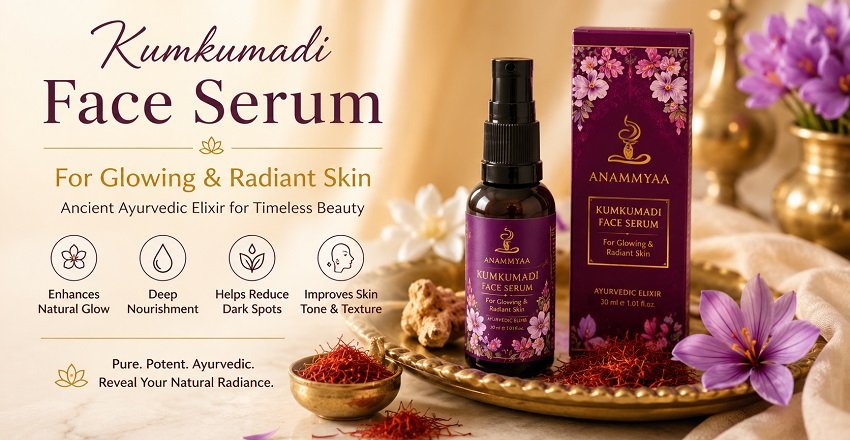
Kumkumadi Face Serum

Benefits, Uses & Why It Works in Monsoon (Complete Guide) Quick Answer: Kumkumadi Face Serum is a classical Ayurvedic formulation — traditionally dating back to texts like the Ashtanga Hridaya — built around saffron, sandalwood, manjishta, and licorice. It is traditionally used to support skin brightness, even tone, and skin clarity, and is especially suited to humid, monsoon-prone skin due to its lightweight, non-greasy texture. What Is Kumkumadi Face Serum? Kumkumadi Taila is one of Ayurveda’s oldest documented skin formulations. It combines a small number of well-studied botanicals — most notably saffron (Kumkuma) — with a carrier oil base, traditionally used to support radiant, even-toned skin over generations of use in Indian households. What Are the Key Ingredients in Kumkumadi Serum? Ingredient Saffron (Kumkuma) Supports brightness and even tone Sandalwood Soothes and calms the skin Manjishta Supports skin clarity Licorice Supports a balanced, even complexion Why Has Kumkumadi Serum Become So Popular? Three reasons describe this serum: Does Kumkumadi Serum… Continue reading Kumkumadi Face Serum

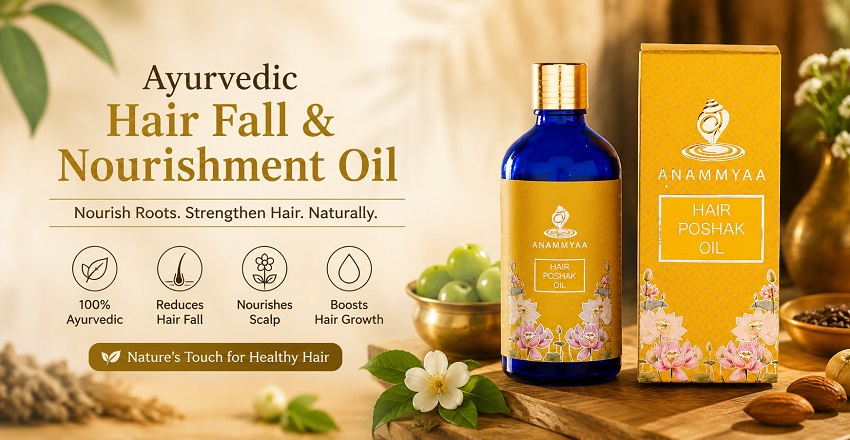
Hair Poshak Oil by Anammyaa

Ayurvedic Hair Fall & Nourishment Oil Anammyaa’s original formulation. Launched 20 years ago. Still trusted today. Hair Poshak Oil was the very first product Anammyaa Wellness ever created — and two decades later, it remains one of our most recommended solutions for hair fall control, scalp nourishment, and natural hair growth. Formulated using classical Ayurvedic principles, this oil combines seven time-tested herbs, each chosen for a specific role in hair health. What is Hair Poshak Oil used for? Hair Poshak Oil is an Ayurvedic hair oil formulated to: It is suitable for regular use as a pre-wash oil treatment or overnight scalp massage oil. Is Hair Poshak Oil good for hair fall? How do I use Hair Poshak Oil? Yes. Hair Poshak Oil is specifically formulated to address hair fall using Ayurvedic herbs like Bhringraj, onion, and curry leaves — each traditionally associated with strengthening hair roots and reducing shedding. It has been part of Anammyaa’s product line for 20… Continue reading Hair Poshak Oil by Anammyaa

Ginger + Lemon: Your Monsoon Agni Reset

There’s a reason your grandmother reached for ginger the moment the first rains hit. In Ayurveda, monsoon is the season when Agni — your digestive fire — grows unpredictable. Humidity dulls it, cooler air weakens it, and the gut that once digested everything with ease now feels heavy, bloated, unsure of itself. Ginger is Agni’s oldest friend. It’s called Vishwabheshaj — the universal medicine — and rightly so. Its ushna (heating) virya kindles digestive fire, its tikshna (sharp) quality clears Ama, the toxic residue of half-digested food that piles up when Agni falters. Lemon, sour and light, adds its own intelligence — stimulating saliva, balancing Pitta just enough without overheating, and helping the body absorb what ginger ignites. Together, they don’t just aid digestion. They wake it up. Why this pairing specifically, in this season: Two ways to bring this into your day — 1. Monsoon Agni Shot Grate fresh ginger, extract a teaspoon of juice. Add juice of half… Continue reading Ginger + Lemon: Your Monsoon Agni Reset

Why Dryness Increases in Summer and Skin Disorders Rise

The Ayurvedic Understanding of Summer Summer, known as Grishma Ritu in Ayurveda, is a season dominated by intense heat and dryness. The sun draws moisture from the earth and from the human body, leading to a state of gradual depletion. This results in: Depletion of Rasa Dhatu, reducing internal hydrationAggravation of Vata, leading to dryness, roughness and sensitivityAccumulation of Pitta, creating heat and inflammation This is the fundamental reason why dryness increases even in a season of heat. Why Skin Suffers During Summer The skin, or Twacha, is closely connected to Rasa and Rakta Dhatu. When hydration reduces and heat rises, the skin becomes the first organ to reflect this imbalance. During summer: Increased Pitta leads to redness, rashes and pigmentationAggravated Vata leads to dryness, flakiness and premature ageingLoss of fluids weakens the skin’s natural resilience As a result, conditions such as heat rashes, tanning, sensitivity and dryness become common. Aggravation of Chronic Skin Conditions Summer also intensifies chronic skin… Continue reading Why Dryness Increases in Summer and Skin Disorders Rise

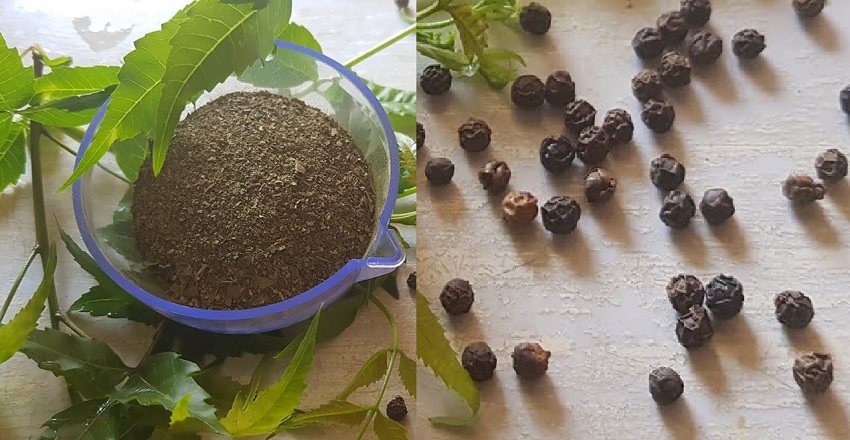
Why Neem Leaves with Black Pepper in April?

An Ayurvedic Seasonal Detox Ritual By Ashma KhannaFounder, Anammyaa Wellness As April arrives, nature begins its transition from the coolness of spring to the intensifying heat of summer. This seasonal shift is not just external—it deeply impacts our internal balance as well. According to Ayurveda, this is the time when Kapha dosha starts liquefying and Pitta begins to accumulate in the body. This combination can lead to various seasonal imbalances if not managed correctly. One of the simplest and most powerful Ayurvedic practices during this period is the intake of 5 fresh neem leaves with black pepper—a traditional ritual rooted in deep healing wisdom. Seasonal Transition and Its Impact on the Body April represents the junction of: During this phase, the body becomes more susceptible to: Ayurveda emphasizes the importance of Ritucharya (seasonal regimen) to prevent disease before it manifests. The Power of Neem Neem holds a sacred place in Ayurveda for its potent detoxifying properties. Ayurvedic Properties of Neem… Continue reading Why Neem Leaves with Black Pepper in April?

Navratri Day 4 – Maa Kushmanda

Energy: Spiritual elevation and Vata- Pitta balance.Devi Kushmanda is associated with the Anahata (heart) Chakra, radiating love, warmth and compassion. Mantra to Chant “Om Devi Kushmandayai Namah”.Chant 108 times for peace, protection and emotional stability Vedic Diet (Vata-Pitta Pacifying) Early Morning Warm water infused with rose petals and 3 cloves in it. Breakfast 1 whole sweet pomengranate (Dadima), balances the ‘tridoshas’, supports the digestion without aggravating the pitta dosha. Mid-Morning 1 glass of A2 gir cow milk with 3-4 strands of kesar, 2 pistachio and 2 crushed green cardamom in it at room temperature Benefits of this infusion Lunch Evening Dandelion or rose cooling herbal tea Dinner (before sunset) Strictly Avoid Vedic Insight Maa Kushmanda is Known as the creator of the universe, she represents life, fertility, and cosmic energy. She is believed to reside within the Surya mandala (sun) and provides energy to the universe.

Navratri Day 3 – Maa Chandraghanta

Energy: Calm strength and Pitta balance Mantra to Chant Om Devi Chandraghantayai NamahChant 108 times for peace, protection and emotional stability Vedic Diet (Pitta Pacifying and Cooling) Early Morning Warm water infused with fennel and 2 gms of mulethi Breakfast Indian local grapes (draksha)pacifies acidity antioxidant and excellent for Hemoglobin Coconut water infused with fresh tulsi leaves Benefits of coconut water with tulsi Mid-Morning Coriander, rose petal and green cardamom infused water Benefits of this infusion Lunch Evening Dandelion or rose cooling herbal tea Dinner (before sunset) Strictly Avoid Vedic Insight Maa Chandraghanta represents the transformation of inner fire into calm strength. Choosing cooling, hydrating and sattvic combinations like grapes, herbal infusions and tulsi-infused coconut water supports both physical detox and mental balance.

Navratri Day 2 – Maa Brahmacharini

Goddess of Tapasya, Discipline and Inner Strength Mantra:“ॐ देवी ब्रह्मचारिण्यै नमः” Ayurvedic Principle of the Day Day 2 represents tapasya and discipline, where food intake is minimal, mindful and Agni-supportive. Diet should: Vedic Diet Plan (Day 2) Early Morning (Empty Stomach) or Post Prayers Supports Ojas formation while keeping digestion light Mid-Morning or Balances Pitta and maintains hydration Lunch (Main Meal) Evening or or Dinner (Light and Early) or Strictly Avoid Spiritual Insight Maa Brahmacharini signifies a life of discipline and inward focus.True fasting is about reducing dependency on food and enhancing inner clarity, not replacing meals with heavier alternatives.

Ayurvedic Diet for Day 1 of Navratri

Early Morning This gently stimulates digestion without burdening the stomach. Mid-Morning Pomegranate helps maintain strength and hydration during fasting while remaining light for digestion. Soak the Pomegranate in hot water for 10 minutes and then peel and eat Lunch (Main Meal of the Day) This meal supports stable energy without overloading digestion. Evening Detox Ritual Instead of heavy snacks, Ayurveda recommends a digestive herbal infusion. Dandelion Root Tea with Green Cardamom A warm cup of dandelion root tea with crushed green cardamom is ideal in the evening. Dandelion root tea is known for: At Anammyaa Wellness, we offer organic Himalayan dandelion root tea, carefully sourced for purity and potency. Adding green cardamom (Elaichi) enhances the benefits. Benefits of Green Cardamom Green cardamom is highly valued in Ayurveda because it: Together, dandelion root and cardamom create a beautiful detoxifying herbal drink, perfect for supporting the body during Navratri fasting. Dinner ( Before Sunset) Dinner should remain very light, as digestion naturally… Continue reading Ayurvedic Diet for Day 1 of Navratri

Take the first step towards towards better health.
Book your Consultation today!

Make appointment make a call

Get in Touch

Speak to our Expert

    Let's Chat

    Choice Billing Address

    ×

    You have no billing addresses.